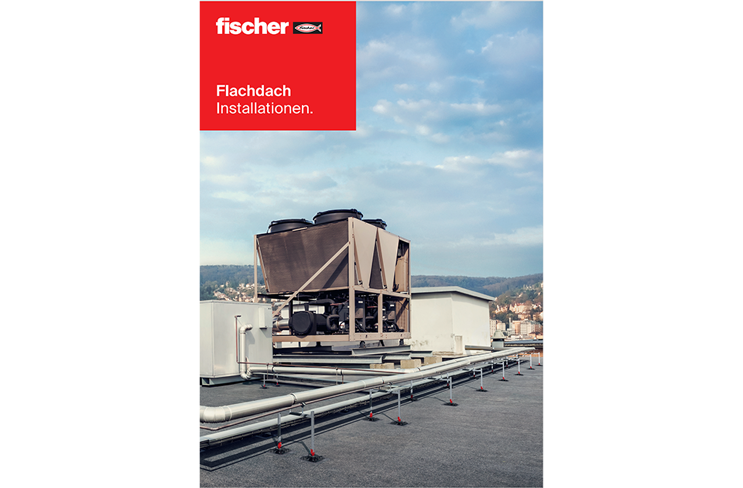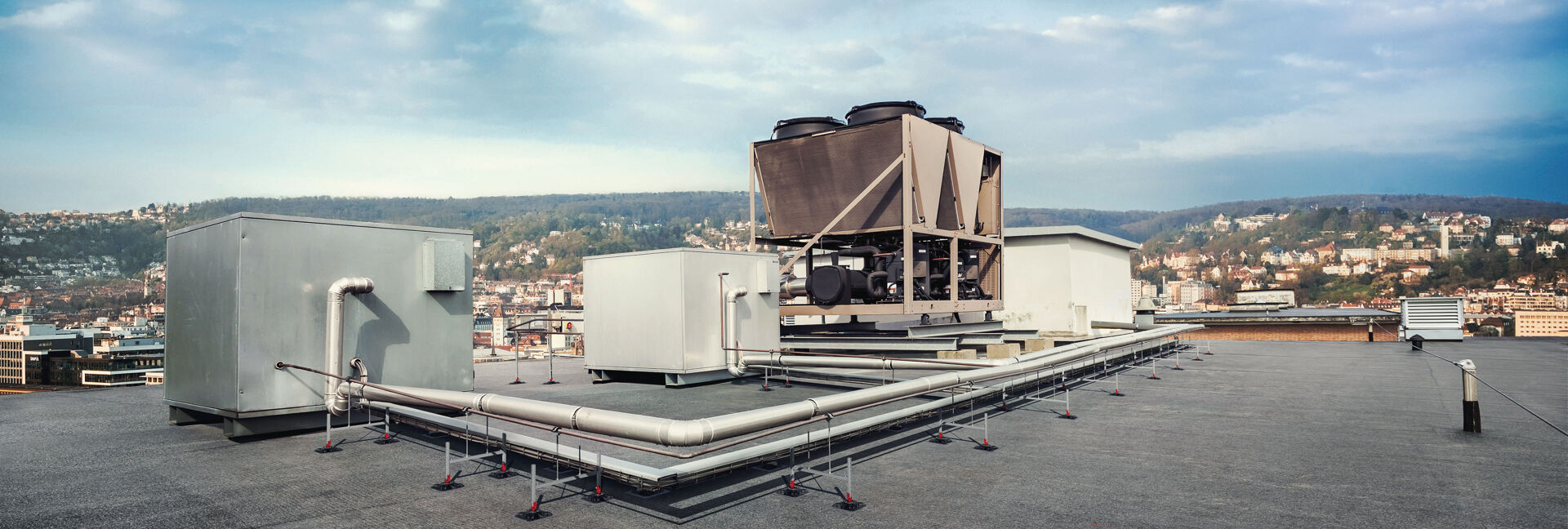
Flat roof installations refer in particular to the laying of parts of the building services installation such as air conditioning units, ventilation ducts, pipes or cable systems on flat roofs.
Flat roof installations specifically refer to the placement of building services components such as air conditioners, ventilation ducts, pipes, or cable systems on flat roofs. Common methods for laying and securing installations on flat roofs include concrete or steel base structures, steel supports positioned on the roof framework, and concrete slabs used as load distributors.
These typical solutions impact the roof sealing and consequently the protection of the rooms and areas beneath the building. Safe installation on flat roofs and safeguarding the roof seal is only achievable with a specialised flat roof base that acts as a load distributor and flexible attachment point.
Your fire damage insurance
Sprinkler systems are highly effective - they detect fires extremely quickly and initiate extinguishing measures immediately. The statistics from the BVFA clearly demonstrate how effective these extinguishing systems are:
Early extinguishing of incipient fires prevents major harm to people and the environment and minimises material damage.
For trade and industry, effective fire protection is essential! If the ability to deliver is compromised by business interruptions, this results in reduced competitiveness or even insolvencies.
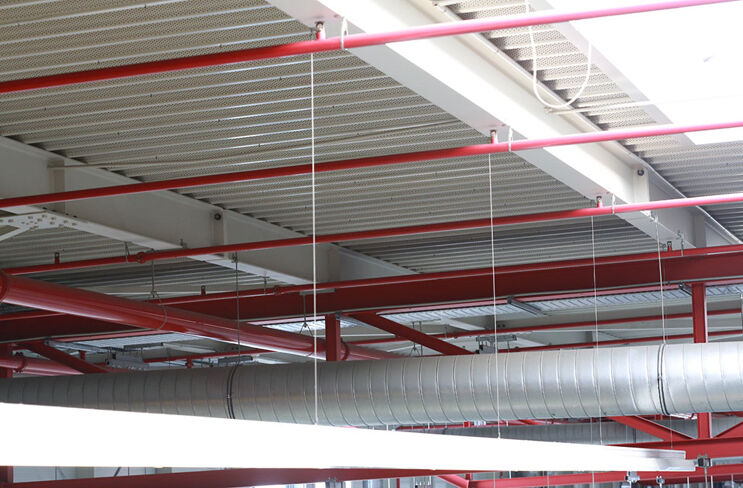
Installation on the flat roof primarily depends on the chosen materials for roof sealing and insulation, as these determine the separation layer to be selected and the compressive strength for the potential load-bearing capacity. In addition to the insulation, the load-bearing capacity of the entire roof structure concerning the absorption of “additional loads” from systems, etc. must be considered.


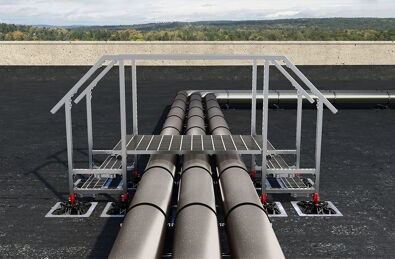

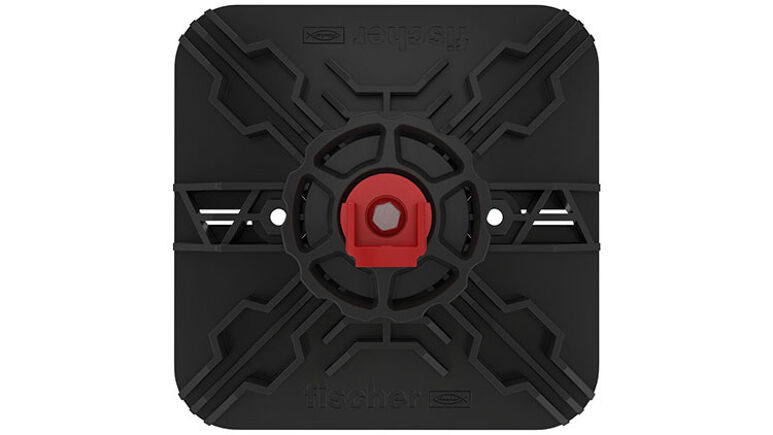
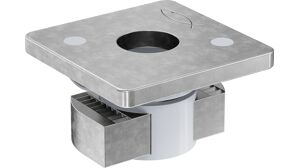
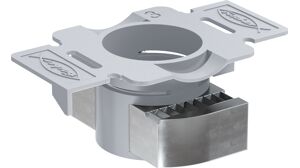
The guarantee for optimal load distribution and reduction of point loads on the flat roof
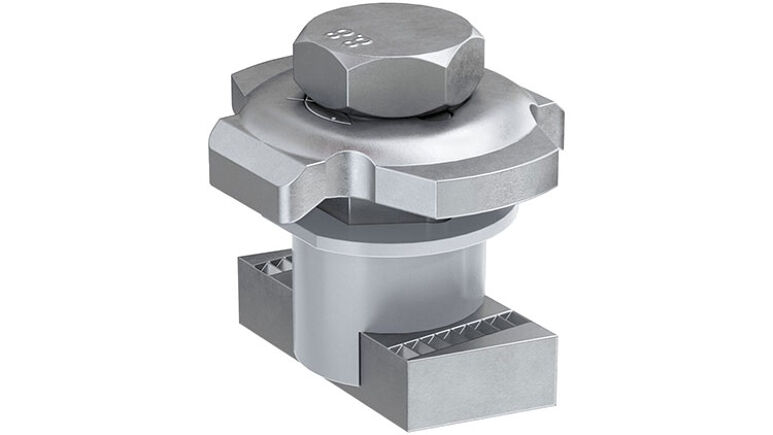
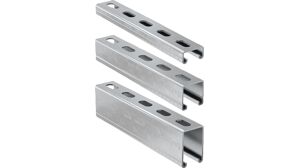
The fischer PFCN 41 zl push-through connector enables a very simple rail design in combination with FUS rails.
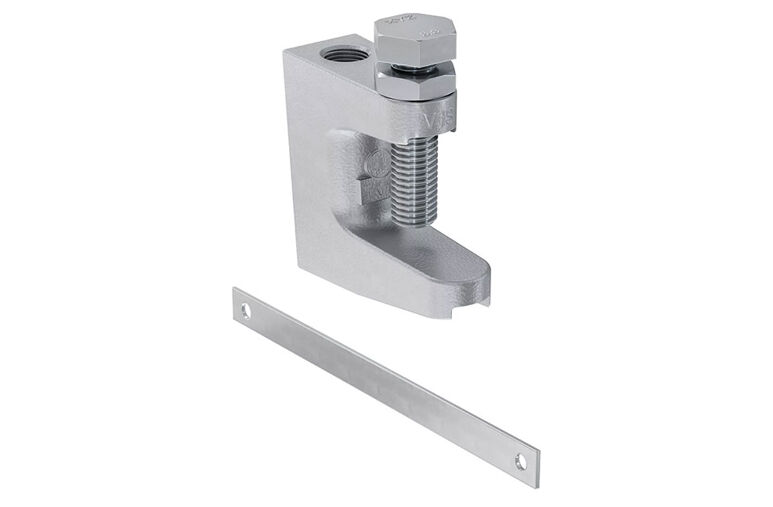
The girder clamp is the optimal fixing solution for steel structures without welding or drilling
In accordance with EN 13162, mineral wool insulation materials may be used as a sealing underlay on roofs with solar systems or other systems if the compressive strength is at least 70 kPa at 10% compression and a load-distributing layer is placed above the insulation. In addition, the continuous compressive strength in accordance with DIN 1606 is also decisive for increased loads on the flat roof.
As an example, on a roof with mineral wool as insulation, a base frame consisting of 2 crossbars and 4 FFRBH flat roof feet can articulately enable a load transfer of up to 2940 kg ~ 3 t. This also depends
on the frame design and the position of the load application on the frame. Taking into account the continuous compressive strength of the insulation material significantly reduces the load-bearing capacity, which is why an accurate calculation is also required taking into account the wind loads.
Learn more about flat roof installation